Perfetto per sale da pranzo informali, cucine o spazi open space.
Sebbene i marmi sopracitati siano i migliori per i tavoli da pranzo, se cercate qualcosa di unico vale la pena menzionare anche altre opzioni:
Marmo Emperador (Spagna)
Un marmo marrone scuro con venature dorate o beige. È resistente, meno poroso e ha un aspetto caldo e ricco. Ottimo per arredi tradizionali o rustici, ma potrebbe sbiadire alla luce diretta del sole.Marmo Pietra coltivataSe amate l'aspetto del marmo ma desiderate un'opzione più economica e che richieda poca manutenzione, il marmo artificiale è un'ottima scelta. È non poroso, resistente ai graffi e disponibile in una varietà di colori e fantasie.
Tuttavia, non possiede la stessa bellezza naturale e la stessa unicità del vero marmo.
Consigli degli esperti per la manutenzione del tavolo da pranzo in marmo
Indipendentemente dal marmo scelto, una corretta manutenzione è fondamentale per far sì che il tavolo da pranzo mantenga un aspetto splendido per molti anni a venire.
Ecco i nostri migliori consigli:
Sigillarlo regolarmente:
La maggior parte dei marmi deve essere sigillata ogni 6-12 mesi (o 12-18 mesi per i tipi meno porosi). Utilizzare un sigillante per pietre di alta qualità per ridurre la porosità e prevenire le macchie.Pulire immediatamente le fuoriuscite:
Pulisci subito eventuali fuoriuscite (in particolare vino, olio e liquidi acidi come il succo di limone) con un panno morbido e umido. Evita di lasciare i liquidi sulla superficie.Utilizzare sottobicchieri e tovagliette:
Proteggete la superficie da graffi, calore e schizzi utilizzando sottobicchieri per le bevande e tovagliette per piatti e posate.
Pulire delicatamente:
Utilizzare un detergente delicato a pH neutro (evitare prodotti chimici aggressivi come candeggina, ammoniaca o aceto) e un panno morbido per pulire la superficie. Evitare di strofinare con spugne abrasive.
Evitare la luce solare diretta:
L'esposizione prolungata alla luce solare diretta può causare lo scolorimento o l'ingiallimento del marmo. Se il tavolo si trova vicino a una finestra, utilizzate tende o persiane per proteggerlo.
Verdetto finale: qual è il marmo più adatto a te?
Il marmo migliore per il tuo tavolo da pranzo dipende dal tuo stile, dal tuo budget e dal tuo stile di vita. Ecco un breve riepilogo per aiutarti a decidere:
Marmo di CarraraIdeale per look audaci e drammatici:
Statuario Marble
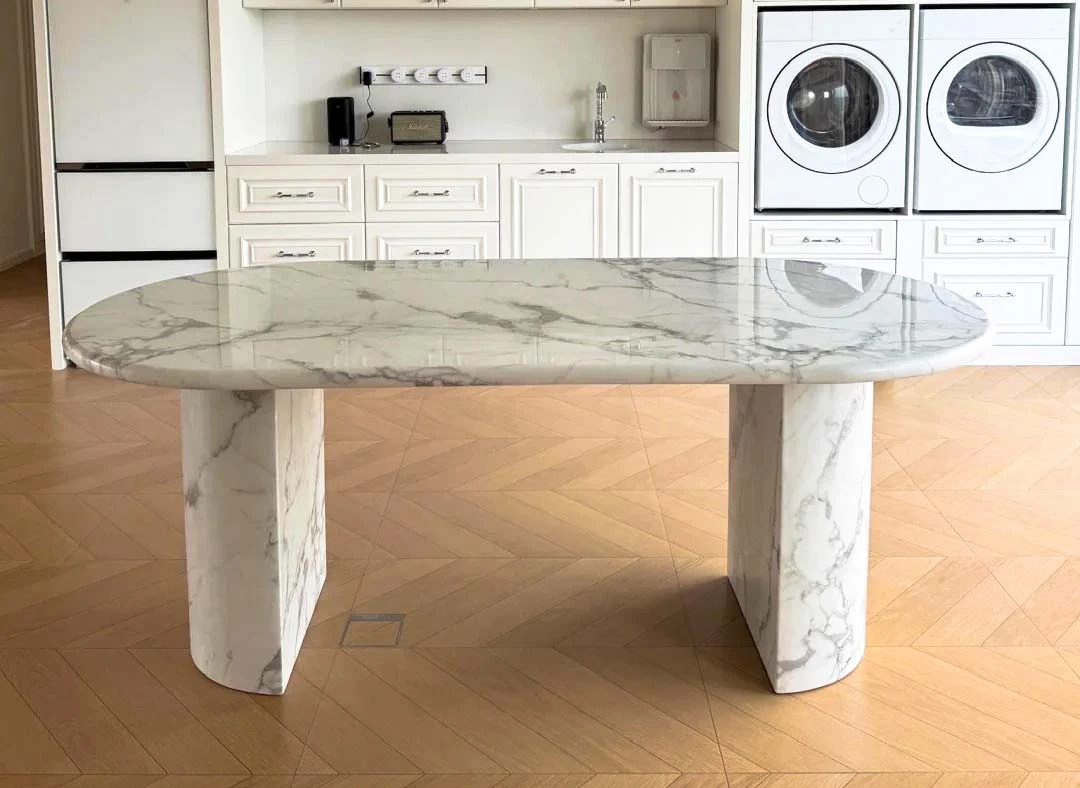
Ideale per ambienti moderni e a bassa manutenzione:
Marmo Nero MarquinaIdeale per ambienti caldi e adatti alle famiglie:
Marmo Crema MarfilIndipendentemente dal marmo che scegli, un tavolo da pranzo in marmo è un investimento che aggiungerà bellezza e valore alla tua casa per gli anni a venire.
Con una manutenzione adeguata, rimarrà il fulcro senza tempo della vostra sala da pranzo.
Domande frequenti sui tavoli da pranzo in marmo
Il marmo è una buona scelta per un tavolo da pranzo?
Sì! Il marmo è un'ottima scelta per i tavoli da pranzo perché è elegante, resistente (con la giusta manutenzione) e versatile. Si adatta a qualsiasi stile d'interni e aggiunge un tocco di lusso al tuo spazio.
Assicuratevi solo di scegliere un tipo di marmo adatto al vostro stile di vita (ad esempio, meno poroso per le famiglie più impegnate).
Quale marmo è il più resistente per i tavoli da pranzo?
Nero Marquina e Calacatta sono tra i marmi più resistenti per i tavoli da pranzo, poiché sono meno porosi e hanno una durezza Mohs di 3-4. Possono resistere all'uso regolare, a cadute e graffi (con la dovuta cura).
I tavoli da pranzo in marmo si macchiano facilmente?
La maggior parte dei marmi è porosa, quindi può macchiarsi se non sigillata correttamente. Tuttavia, i marmi meno porosi (ad esempio Nero Marquina, Calacatta) sono meno inclini a macchiarsi. Sigillare regolarmente e asciugare immediatamente eventuali fuoriuscite aiuterà a prevenire le macchie.
Quanto costa un tavolo da pranzo in marmo?
Il costo di un tavolo da pranzo in marmo varia notevolmente in base al tipo, alle dimensioni e alla qualità del marmo. I tavoli in marmo di Carrara sono i più economici (di fascia media), mentre Calacatta e Statuario sono opzioni di lusso.Per un tavolo da pranzo in marmo si può prevedere una spesa compresa tra $ 500 e $ 5.000+.
Great for both formal and casual dining spaces, and pairs well with modern, bohemian, or traditional decor.
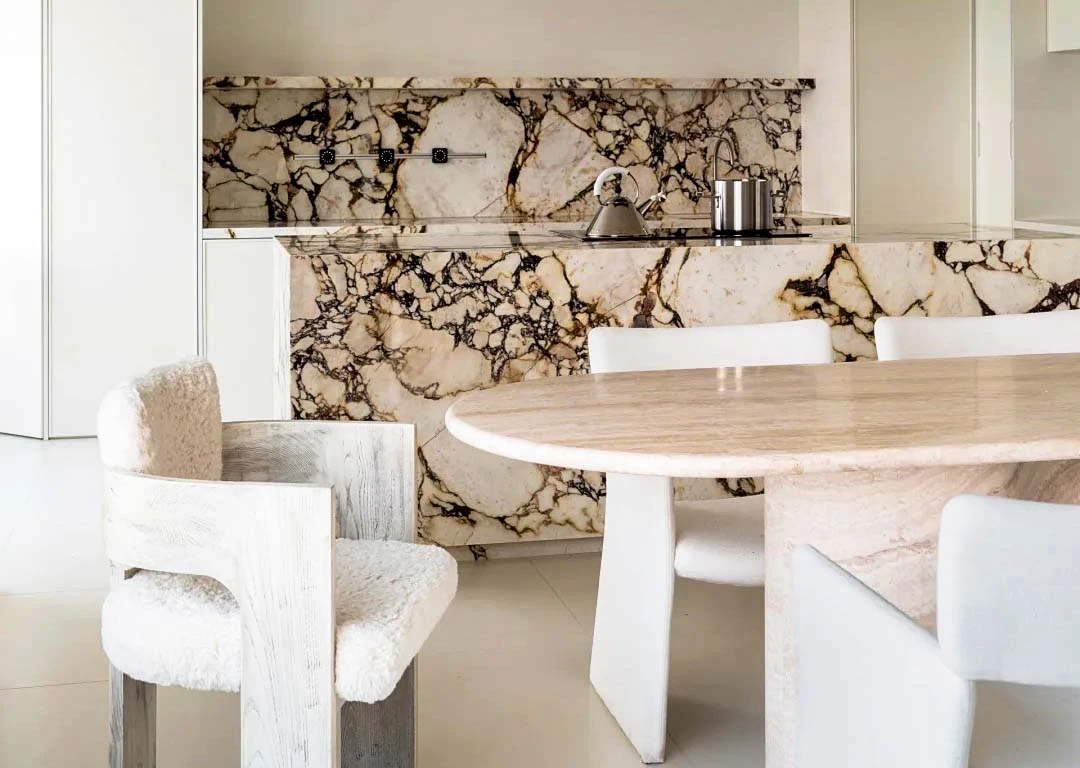
3. Statuario Marble – Bold & Dramatic
Origin: Carrara, Italy
Key Characteristics: Statuario marble is a premium white marble with a bright, almost translucent base and bold, thick gray veining. It’s similar to Calacatta but has more dramatic veining, often forming swirling patterns that make each slab unique.
Statuario has a Mohs hardness of 3-4 and is slightly less porous than Carrara, making it a durable choice for dining tables.
Pros:
Dramatic, eye-catching veining that makes a statement
Bright white base that brightens up dining spaces
Durable enough for daily use (with proper maintenance)
Luxurious appearance without the same price tag as Calacatta
Cons:
More expensive than Carrara (mid-to-luxury budget)
Requires regular sealing (every 6-12 months)
Bold veining may clash with busy decor styles
Best For: Homeowners who want a bold, statement-making dining table with a luxurious look.
Perfect for modern or contemporary dining rooms where the table is the focal point.
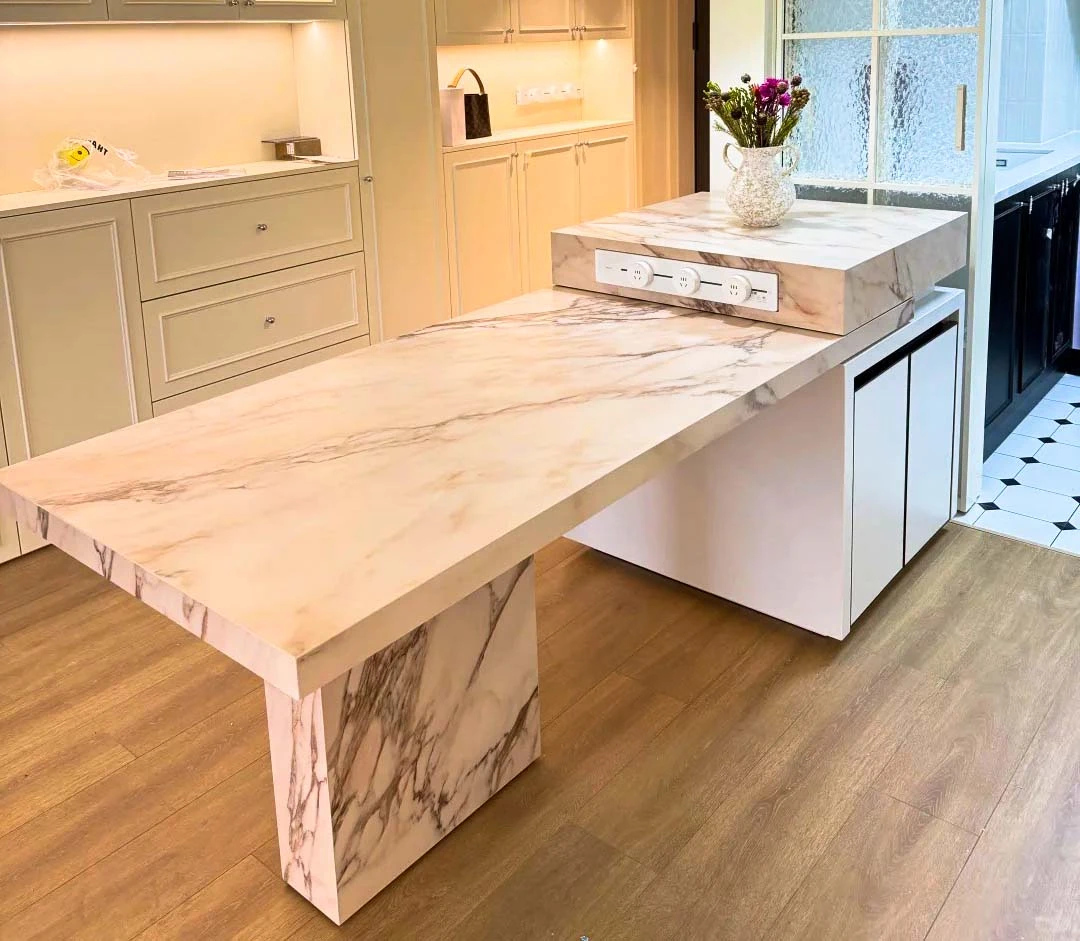
4. Nero Marquina Marble – Sleek & Modern
Origin: Markina-Xemein, Spain
Key Characteristics: Nero Marquina is a black marble with a smooth, polished surface and striking white veining. It’s a sleek, modern choice that adds contrast and sophistication to any dining space.
Nero Marquina has a Mohs hardness of 3-4 and is less porous than most white marbles, making it easier to maintain and less prone to staining.
Pros:
Sleek, modern look that complements contemporary decor
Black base hides scratches and spills better than white marbles
Less porous, so it requires less frequent sealing (every 12-18 months)
Striking white veining adds visual interest without being overwhelming
Cons:
More expensive than Carrara (mid-to-luxury budget)
Direct sunlight may cause fading over time
White veining can show dust more easily
Best For: Homeowners who prefer a modern, sleek aesthetic.
Perfect for contemporary dining rooms, open-concept spaces, or anyone who wants a table that hides imperfections well.
5. Crema Marfil Marble – Warm & Inviting
Origin: Alicante, Spain
Key Characteristics: Crema Marfil is a beige or cream-colored marble with subtle gold, brown, or gray veining. It’s a warm, inviting choice that adds a cozy touch to dining spaces, making it perfect for casual or family-friendly homes.
Crema Marfil has a Mohs hardness of 3-4 and is slightly porous, requiring regular sealing.
Pros:
Warm, neutral color that hides stains and scratches better than white marbles
Versatile design that complements bohemian, traditional, or coastal decor
Mid-range budget, more affordable than Calacatta or Statuario
Soft veining adds warmth and texture without being too bold
Cons:
Requires regular sealing (every 6-12 months)
Cream color may fade over time with direct sunlight
Less dramatic than white or black marbles (not ideal for statement pieces)
Best For: Families, busy households, or anyone who wants a warm, low-key dining table.
Perfect for casual dining rooms, kitchens, or open-concept spaces.
Honorable Mentions: Other Marbles to Consider
While the above marbles are the best for dining tables, there are a few other options worth mentioning if you’re looking for something unique:
Emperador Marble (Spain)
A dark brown marble with gold or beige veining. It’s durable, less porous, and has a warm, rich appearance. Great for traditional or rustic decor, but it may fade in direct sunlight.
Marble Cultured Stone
If you love the look of marble but want a more affordable, low-maintenance option, cultured marble (man-made) is a great choice. It’s non-porous, scratch-resistant, and comes in a variety of colors and patterns.
However, it doesn’t have the same natural beauty and uniqueness as real marble.
Expert Tips for Maintaining Your Marble Dining Table
No matter which marble you choose, proper maintenance is key to keeping your dining table looking beautiful for years to come.
Here are our top tips:
Seal it regularly: Most marbles need to be sealed every 6-12 months (or 12-18 months for less porous types). Use a high-quality stone sealer to reduce porosity and prevent staining.
Clean spills immediately: Wipe up spills (especially wine, oil, and acidic liquids like lemon juice) with a soft, damp cloth as soon as they happen. Avoid letting liquids sit on the surface.
Use coasters and placemats: Protect the surface from scratches, heat, and spills by using coasters for drinks and placemats for plates and utensils.
Clean gently: Use a mild, pH-neutral cleaner (avoid harsh chemicals like bleach, ammonia, or vinegar) and a soft cloth to clean the surface. Avoid scrubbing with abrasive sponges.
Avoid direct sunlight: Long-term exposure to direct sunlight can cause marble to fade or yellow. Use curtains or blinds to protect your table if it’s near a window.
Final Verdict: Which Marble Is Best for You?
The best marble for your dining table depends on your style, budget, and lifestyle. Here’s a quick recap to help you decide:
Best for luxury & statement: Calacatta Marble
Best for classic & affordable: Carrara Marble
Best for bold & dramatic: Statuario Marble
Best for modern & low-maintenance: Nero Marquina Marble
Best for warm & family-friendly: Crema Marfil Marble
No matter which marble you choose, a marble dining table is an investment that will add beauty and value to your home for years to come.
With proper maintenance, it will remain a timeless centerpiece of your dining space.
FAQs About Marble Dining Tables
Is marble a good choice for a dining table?
Yes! Marble is a great choice for dining tables because it’s elegant, durable (with proper maintenance), and versatile. It complements any interior style and adds a touch of luxury to your space.
Just be sure to choose a marble type that fits your lifestyle (e.g., less porous for busy households).
Which marble is the most durable for dining tables?
Nero Marquina and Calacatta are among the most durable marbles for dining tables, as they are less porous and have a Mohs hardness of 3-4. They can withstand regular use, spills, and scratches (with proper care).
Do marble dining tables stain easily?
Most marbles are porous, so they can stain if not sealed properly. However, less porous marbles (e.g., Nero Marquina, Calacatta) are less prone to staining. Regular sealing and wiping up spills immediately will help prevent stains.
How much does a marble dining table cost?
The cost of a marble dining table varies widely based on the marble type, size, and quality. Carrara marble tables are the most affordable (mid-range), while Calacatta and Statuario are luxury options.
Expect to pay anywhere from $500 to $5,000+ for a marble dining table.